Biography
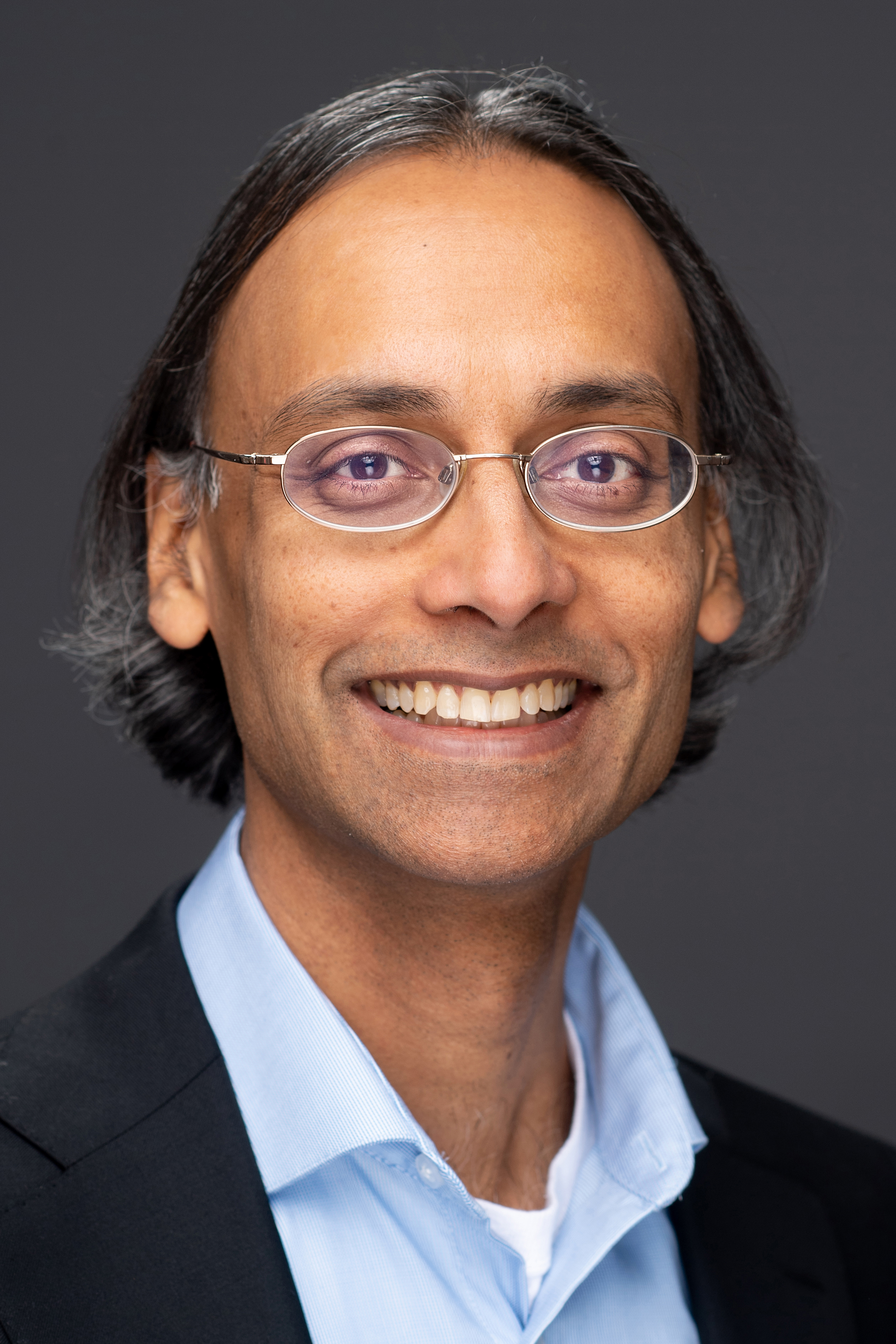
Anant Sahai is currently the Qualcomm Chair Professor in Electrical Engineering and Computer Sciences at UC Berkeley. He did his undergraduate work in EECS at UC Berkeley, and then went to MIT as a graduate student studying Electrical Engineering and Computer Science (Course 6 in MIT-speak). After graduating with his PhD, and before joining the Berkeley faculty, he was on the theoretical/algorithmic side of a team at the startup Enuvis, Inc. developing new adaptive software radio techniques for GPS in very low SNR environments (such as those encountered indoors in urban areas).
He currently serves also as faculty adviser to UC Berkeley's chapter of Eta Kappa Nu. He has previously served as the Treasurer for the IEEE Information Theory Society. He has coordinated machine learning efforts for SpectrumX, the NSF's Center for Spectrum Innovation, and was very involved with the data engineering efforts there.
His research interests span machine learning, wireless communication, information theory, signal processing, and decentralized control — with a particular interest at the intersections of these fields. Within wireless communication, he is particularly interested in Spectrum Sharing and Cognitive Radio, very-low-latency ultra-reliable wireless communication protocols for the Internet Of Things, and how agents could learn how to communicate with each other without the need for heavy-handed standards. Within control, he is interested in decentralized control and how agents could learn how to cooperate and interact with unknown environments. He is also interested in the foundations of machine learning, particularly as it pertains to why overparameterized models do or do not work. He is also quite interested in in-context learning in modern ML models.
On the teaching side, recently he has been teaching Berkeley's main Deep Learning course with hundreds of students, Berkeley's main Machine Learning course with hundreds of students, along with special topics courses that take students to the research frontier. He has also taught the main communication and wireless communications courses, as well as the foundational courses on probability and information theory.